
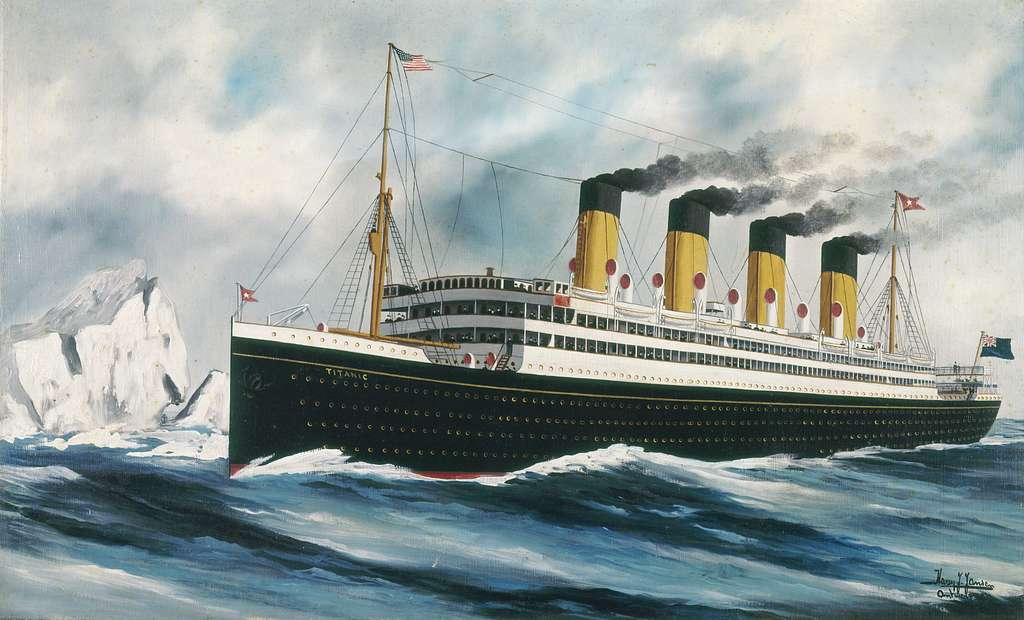
The Titanic: a brief, tragic story
In April 1912, the RMS Titanic was the largest and most luxurious passenger ship ever built. People called it “unsinkable”—not because it literally couldn’t sink, but because its advanced design made sinking seem almost impossible. On April 10, it left Southampton, England, bound for New York City, carrying over 2,200 passengers and crew. On board were millionaires and immigrants, celebrities and families starting new lives—all sharing the same ship for a few days.
Four days into the voyage, on the night of April 14, 1912, the sea was eerily calm and the air bitterly cold. The Titanic had received multiple warnings about icebergs in the area, but it continued at near full speed. At 11:40 p.m., lookouts spotted an iceberg dead ahead. The ship tried to turn and reverse engines—but it was too late.
The iceberg scraped along the ship’s right side, opening a series of small gashes below the waterline. They didn’t look dramatic, but they were fatal. Water flooded into six compartments; the ship was designed to survive four. Slowly, silently at first, the Titanic began to sink.
At 12:05 a.m., the order was given to prepare lifeboats. This is where the tragedy deepened. The ship carried lifeboats for only about half the people on board—legal at the time but horrifying in hindsight. Worse, many boats were launched half-empty, because people couldn’t believe the ship would actually go down.
The rule was “women and children first”, which meant many men—especially in third class—never had a chance. Some passengers refused to leave loved ones. Others stepped back so strangers could live. The ship’s band famously kept playing music to calm the crowd as chaos slowly spread.
By 2:18 a.m., the bow was completely underwater. The stern lifted into the air, the lights flickered—and then the ship broke in two. At 2:20 a.m. on April 15, 1912, the Titanic disappeared beneath the Atlantic Ocean.
More than 1,500 people died, mostly from hypothermia in the freezing water. The survivors—about 700—were rescued hours later by another ship, the Carpathia.