
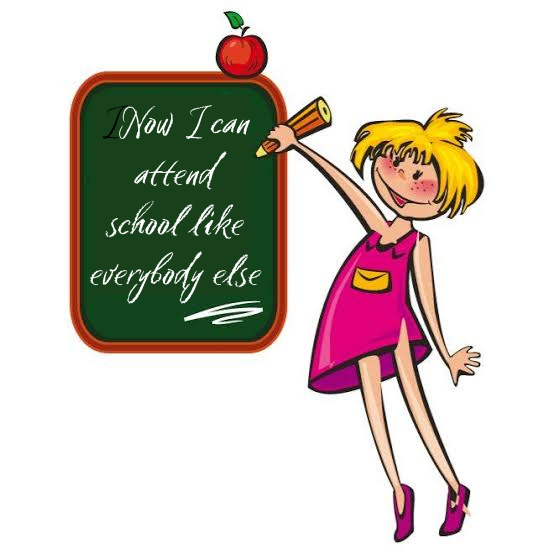
 Imagine the world as one giant classroom.
In one corner, some children have books, teachers, computers, and encouragement. They raise their hands, ask questions, dream big, and are told, “You can be anything.”
In another corner, there are children who are just as curious, just as clever, and just as full of ideas—but many of them are girls who hear different messages.
“School isn’t for you.”
“That’s a job for boys.”
“Your dreams can wait.”
For millions of girls around the world, these weren’t just words. They were barriers.
Now imagine all those girls deciding they had had enough of being invisible.
Not with shouting.
Not with fighting.
But with stories.
One girl shared how she walked hours just to get to school. Another spoke about wanting to become a doctor. Someone dreamed of inventing cleaner energy. Another simply wanted to play football without being laughed at.
Little by little, their stories spread across countries, languages, and cultures. People began to realize that when girls are held back, everyone loses—not just the girls, but families, communities, and entire nations.
Governments, teachers, parents, and organizations started asking an important question:
“What if every girl had the same chance to learn, lead, and choose her own future?”
That conversation grew so important that, in 2011, the United Nations declared that every year, on October 11, the world would celebrate the International Day of the Girl Child.
But “celebrate” doesn’t mean pretending every problem has been solved.
It means taking one day to shine a spotlight on girls’ achievements, to recognize the challenges many still face, and to remind ourselves that talent isn’t determined by gender—opportunity often is.
Today, girls are breaking records in science, leading climate movements, winning Olympic medals, creating businesses, writing books, exploring space, and changing their communities. Yet many still face obstacles such as limited access to education, early marriage, violence, discrimination, or unequal opportunities.
So, the International Day of the Girl Child isn’t about saying girls are better than boys.
It’s about making sure that a girl’s future is shaped by her dreams—not by the limitations others place on her.
Because when one girl gets an education, a community grows stronger.
When one girl discovers her voice, others find the courage to speak.
And when millions of girls are given equal opportunities, the world doesn’t just become fairer.
It becomes smarter, healthier, more creative, and more prosperous.
That’s why, every October 11, we’re not only celebrating girls.
We’re celebrating possibility.
A memorable closing
“The International Day of the Girl Child isn’t about giving girls special treatment. It’s about making sure every girl has the chance to write her own story. Because when every child can dream freely, everyone benefits.”